Vietnam sets tax and customs reform priorities at South Korean business dialogue
Business representatives called for quicker VAT refunds, uniform interpretation of tax rules and more predictable customs valuations and product classifications.
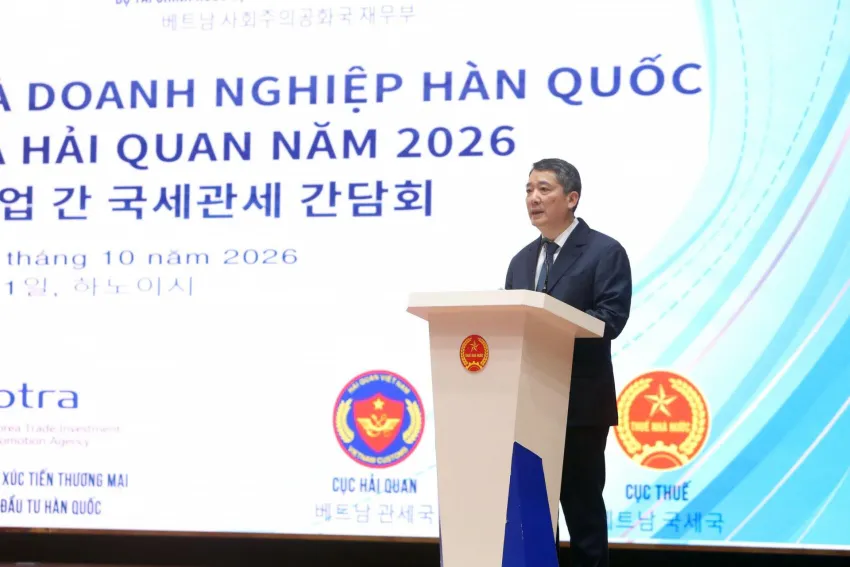
Vietnam’s Ministry of Finance plans further changes to tax and customs regulation, with global minimum tax provisions and advance pricing agreements among its priorities, Deputy Minister Cao Anh Tuan said at a 2026 dialogue with South Korean businesses.
Tuan said the ministry would work to improve legislation, strengthen compliance management and respond to business concerns. He said advance pricing agreements would be encouraged under a decentralised approach consistent with international practices.
The deputy minister cited Resolution No.280/NQ-CP of September 22, 2026, which sets out an action plan for the foreign-invested sector. The resolution seeks greater transparency, stability and predictability in the legal framework, including tax and customs rules.
South Korean Ambassador to Vietnam Lee Mi Yon welcomed Vietnam’s investment reforms. She said the dialogue had taken place annually since 2008 and that earlier discussions had led to policy improvements reflecting some business recommendations.
Koo Bon Kyung, CEO of the Korea Trade-Investment Promotion Agency for Southeast Asia and Oceania, credited electronic invoicing and improvements to automated customs clearance with making processing more efficient and transparent. He also urged quicker VAT refunds and uniform interpretation of tax rules across Vietnam.
His customs proposals included more predictable valuations and Harmonised System code classifications, faster advance product-classification rulings, upgrades to Vietnam’s National Single Window and wider use of AI-enabled electronic clearance.
Koo also sought clearer eligibility for investment incentives and stronger protection for investors and intellectual property. Longer-term recommendations included closer technology cooperation with South Korean companies, development of supporting industries and more effective implementation of the Direct Power Purchase Agreement mechanism to improve renewable electricity access.