Vietnam banks announce lending rate cuts of up to 3 percentage points
The reductions follow government and central bank calls to ease borrowing costs for businesses and priority sectors.
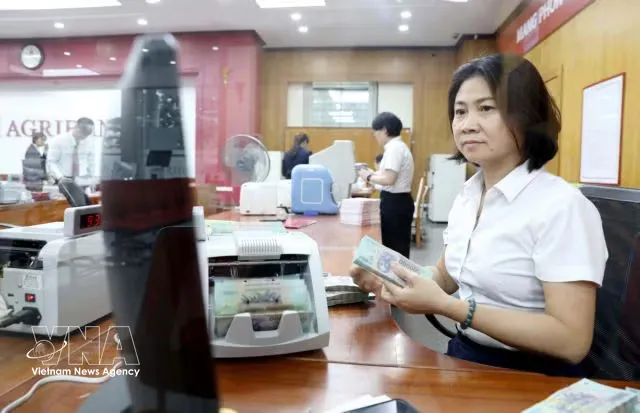
Fourteen Vietnamese lenders have announced lending rate reductions, mostly of 1.5-2 percentage points and reaching 3 percentage points in some cases, according to Vietnam News Agency. Nearly 20 banks have also lowered deposit rates, generally by 0.5 percentage points a year.
The changes follow requests from the Government and the State Bank of Vietnam (SBV) to make borrowing cheaper for businesses and priority sectors. At an October 19 meeting attended by 46 commercial banks, SBV Governor Pham Duc An called for lower rates alongside measures to safeguard financial system stability.
VPBank has reduced annual lending rates by 1.5 percentage points for individual borrowers working in six sectors, including tourism, agriculture and aquaculture. It has also allocated ₫10 trillion for working capital lending to small- and medium-sized enterprises, offering annual rate cuts of up to 1.5 percentage points in priority sectors.
HDBank's ₫10 trillion SME credit package carries rates 1.5 percentage points below its existing preferential rates. TPBank has pledged reductions of 1.5-2 percentage points, while SHB's production and business lending package offers rates beginning at 5 per cent a year.
Agribank, VietinBank, BIDV and Vietcombank have introduced measures to reduce annual lending rates by up to 2 percentage points. For certain sectors, Vietcombank is offering reductions reaching 3 percentage points on short-term borrowing.
For deposits with terms of at least six months, Sacombank and MSB have lowered annual rates by 0.5 percentage points. VPBank made an equivalent reduction for individual customers' online savings with 15- and 18-month maturities.
Prime Minister Le Minh Hung pledged measures to bring lending rates down at the October 17 opening of the 16th National Assembly's second session. An October 15 Party Central Committee conclusion also urged more credit for production, businesses and priority sectors, alongside stricter controls on potentially risky lending.