Vietnam and Poland pursue investment cooperation in pharmaceuticals, rail and space
At talks in Hanoi, the prime ministers called for industrial partnerships after the countries elevated relations to a strategic partnership.
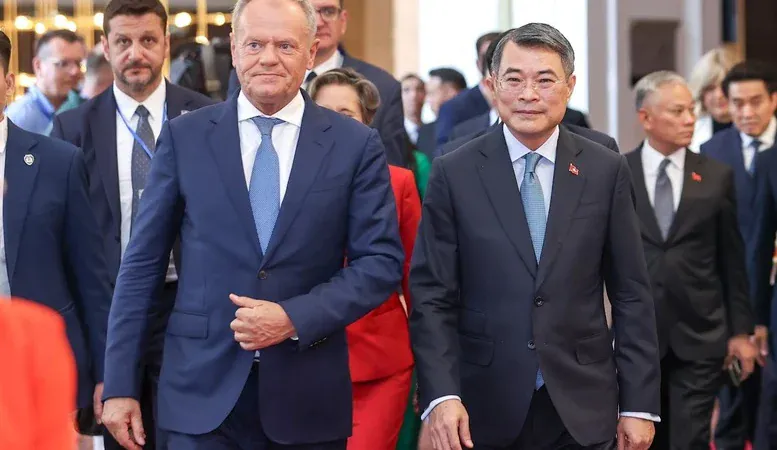
Pharmaceuticals, railways and space technology are among the sectors Vietnam and Poland want to develop through closer investment ties. Vietnamese Prime Minister Le Minh Hung and Polish Prime Minister Donald Tusk set out their priorities during a business roundtable in Hanoi after bilateral relations were upgraded to a strategic partnership.
Hung sought Polish investment in railways and shipbuilding, as well as renewable energy, environmental services, smart agriculture and digital transformation. He called for projects that transfer technology, support sustainability and generate higher added value.
He urged the governments to remove obstacles related to customs, immigration, technical standards, regulations and investment procedures. Transport proposals included better maritime and air connections, alongside initial studies of a possible railway connection to supplement sea freight linking Asia with Europe.
Tusk identified healthcare and pharmaceuticals as promising areas, citing Polish drugmaker Adamed. He said cooperation could encompass research, manufacturing, fresh investment and medicine exports to regional markets.
The Polish leader also proposed defence cooperation involving technology, training, services and production, rather than equipment sales alone. Possible space-related work included analysing satellite data and observing Earth to support agriculture and the management of water, infrastructure and the environment. Artificial intelligence could create additional opportunities, he said.
Tusk said Vietnam could give Polish companies a base for ASEAN operations, while Poland could provide Vietnamese investors with a route into the EU. He advocated industrial and investment partnerships extending beyond conventional trade.
Polish investment in Vietnam comprised 35 valid projects with US$412 million in registered capital as of September 2026. Bilateral trade was nearly US$4 billion in 2025, rising 14.8 per cent year-on-year. For the first nine months of 2026, trade reached nearly US$3.5 billion, an increase of 19 per cent.