Ho Chi Minh City backs long-term plan for multiple urban centres
The framework envisages five growth poles and five satellite centres, with population projected to exceed 27 million by 2050.
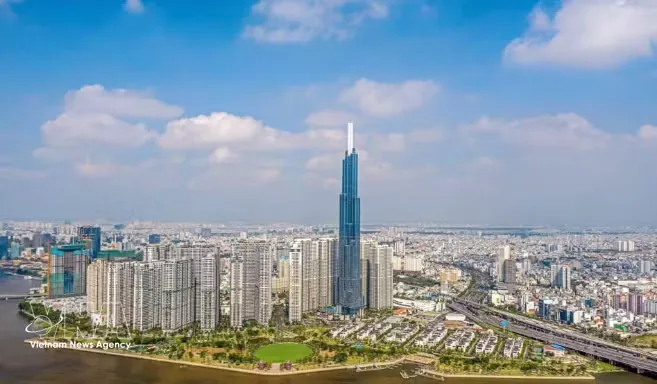
Councillors in Ho Chi Minh City endorsed a master plan on October 30 covering 2025–2050, alongside a vision stretching 100 years ahead. The framework envisages a network of urban centres and sets out ambitions for the metropolis to attain global-city status.
The planning area encompasses approximately 6,772.59 sq.km and 168 administrative units. Population projections put the city at around 18 million residents by 2030 and above 27 million by 2050, while the workforce is expected to reach 8.2 million and 11.3 million respectively.
Each of the five growth poles would have a different focus. The centre would concentrate on international financial services, with innovation assigned to the east. The north would emphasise industry, high technology and logistics. Southern areas would combine seaports and free trade with international logistics and energy, while the west would focus on urban development alongside education and healthcare.
Presenting the proposals, municipal People’s Committee Vice Chairman Nguyen Manh Cuong said development would favour compact districts near transport hubs and bring underused areas back into use. Five satellite centres would support the growth poles, while 10 management zones would reflect differences in local functions, land, infrastructure and environmental requirements.
The economic programme aims to place greater weight on productivity, innovation, technology and services with high added value, rather than relying mainly on capital, land and labour. Its growth priorities include advanced manufacturing, digital services, AI, sophisticated logistics and a regional financial centre.
Education targets include 2 million students by 2050, with another 1,400–2,000 hectares earmarked for higher education during 2030–2050. Healthcare plans envisage hospitals at city gateways, specialist medical clusters and corridors for medical tourism, together with improvements to preventive care and local health services.