Vietnam needs US$280-300 billion a year for growth target, economist says
Speakers at the 2026 Autumn Economic Forum urged more efficient investment and higher productivity to support double-digit economic growth.
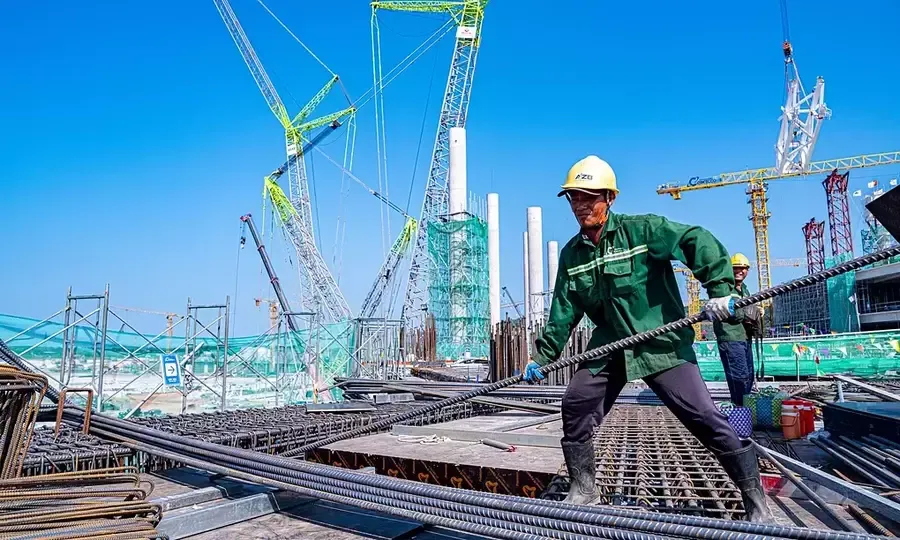
Vietnam would need annual investment of US$280-300 billion to pursue double-digit economic growth, according to Can Van Luc, a member of the National Financial and Monetary Policy Advisory Council. He said investment would also need to be used more efficiently.
Speaking at the 2026 Autumn Economic Forum, Luc said total investment should remain at around 40% of GDP. The council estimated that the annual amount required would rise by around 14% each year. Vietnam is seeking rapid growth as part of its ambition to become a high-income country by 2045.
Public investment could meet up to 30% of the funding requirement, leaving 70% to sources including private businesses and foreign investors, Luc said. He called for capital-market development, noting that shares and corporate bonds provide just 13-14% of investment, compared with 51% from banks.
Luc also proposed reducing Vietnam’s incremental capital-output ratio, a measure of investment efficiency, to 4.5. He urged a shift towards science and technology, education and healthcare, away from the current allocation of 80% of public investment to infrastructure.
Productivity was another concern raised at the forum. Mariam J. Sherman, the World Bank’s division director for Vietnam, Cambodia and Laos, said manufacturing workers in Vietnam generate about US$6.7 in hourly value added, below half the Chinese level. She said growth in total factor productivity had almost stopped since 1990.
Denis Depoux, global managing director of consultancy Roland Berger, said innovation and modernisation of the industrial value chain would be central to improving total factor productivity. Forum experts also highlighted the challenge of implementing policies effectively without sacrificing macroeconomic stability.