Thailand requires physical checks on every scrap metal container
Customs says the checks will delay clearance and increase importers’ costs, while a possible ban on metal and rubber scrap remains under consideration.
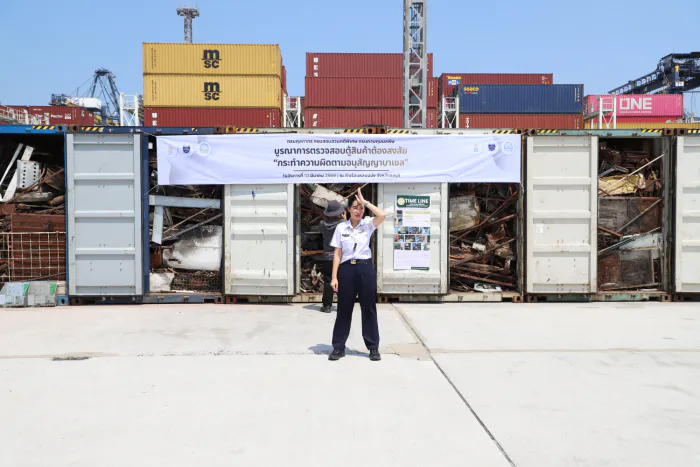
Thailand’s Customs Department has made physical checks mandatory for all containers labelled as metal scrap, citing efforts by offenders to hide banned electronic waste in such cargo. Breaches will trigger legal action, and importers will have to fund the return of prohibited goods to their countries of origin, the department said.
The scale of the trade presents a challenge: imports of steel, aluminium and copper scrap reached 2.76 million tonnes between January and September 2026, or about 14,600 containers monthly. Customs said examining nearly 500 containers daily would significantly extend clearance times and push up costs for legitimate importers.
According to the department, densely packed loads frequently make hidden e-waste difficult to identify with X-ray scanners. Inspectors need heavy machinery to empty containers for examination. Earlier checks targeted cargo selected through intelligence, import data and traders’ compliance records.
Director-general Phantong Loykulnanta put e-waste confiscations at 10,029 tonnes for fiscal 2026, which closed on September 30. He said 5,290 tonnes had already been returned to their origin countries. Customs will also carry out retrospective audits targeting high-risk importers.
A longer-term option being considered is to prohibit metal and rubber scrap imports. The proposal would allow six to 12 months for transition, limiting disruption to domestic smelting and recycling facilities dependent on imported materials.
During that interval, permits would be required and restricted to factories sourcing inputs for their own production when domestic supplies were inadequate. A pre-shipment inspection certificate would also be compulsory for each consignment. Thailand barred e-waste imports in 2020, then extended the regulations in 2025 to cover 463 types.