Indonesia achieves self-sufficiency in eight foods, minister says
Farmers’ purchasing power has strengthened, while rice imports for domestic consumption have stopped, according to the food affairs minister.
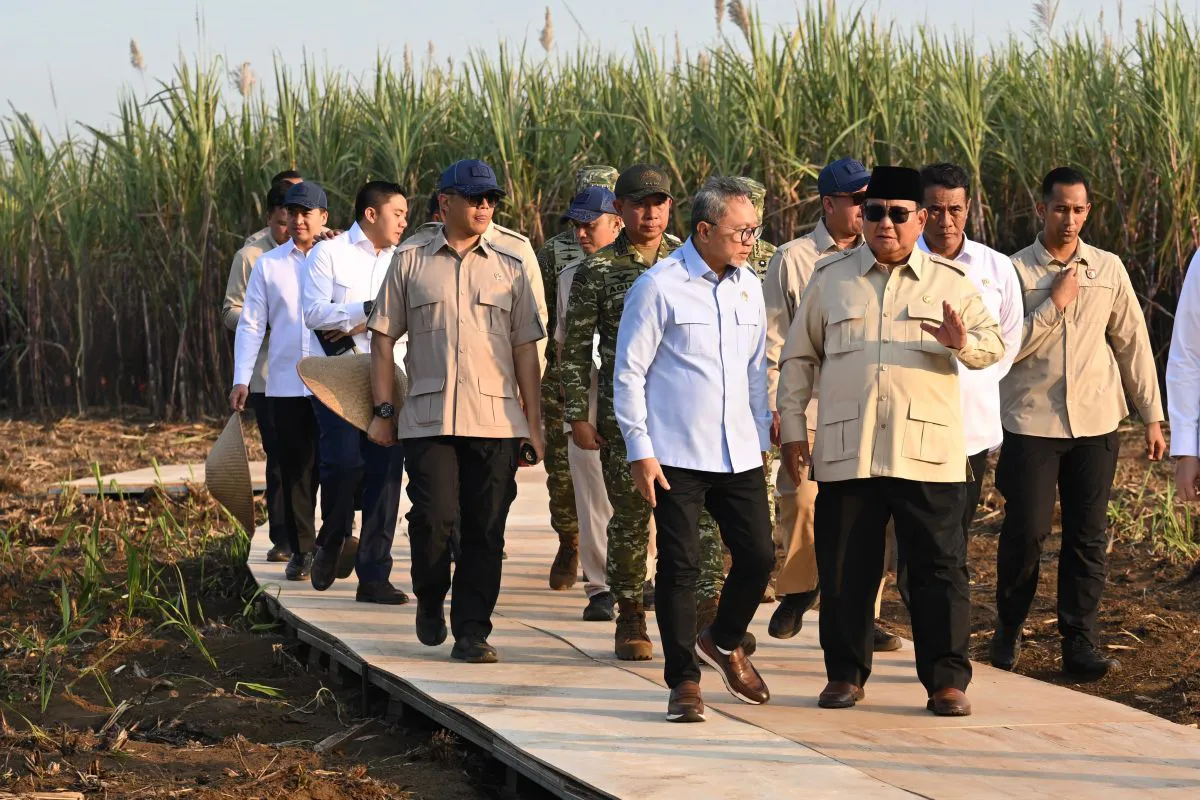
Higher domestic output has made Indonesia self-sufficient in eight food commodities over President Prabowo Subianto’s first two years in office, according to Coordinating Minister for Food Affairs Zulkifli Hasan. He linked the gains to agricultural price support, fertiliser subsidies and measures supporting rural economies.
The commodities comprise shallots, eggs, chicken meat, rice, corn, consumer sugar and two types of chilli: bird’s eye and large red. Zulkifli said improved production capacity had allowed the government to stop rice imports intended for domestic consumption.
Government rice reserves totalled approximately 4.55 million metric tons as of October 20, 2026, according to Ahmad Rizal Ramdhani, president director of state logistics agency Bulog, which manages the stocks.
Statistics Indonesia (BPS) reported a September 2026 national Farmer Exchange Rate (NTP) of 131.11, against 120.30 in September 2024. The measure compares what farmers receive for their products with their spending on household needs and production inputs. A rise indicates better purchasing power rather than directly measuring total income.
Harvest price protections include a government purchase price of Rp6,500 per kilogram for dry-harvested paddy bought at the farm gate. Corn ready for harvesting qualifies for a Rp5,500-per-kilogram purchase price when its moisture content is 18–20 per cent.
Simpler distribution arrangements accompanied a 20 per cent reduction in maximum retail prices for subsidised fertilisers, effective October 22, 2025. Urea fell to Rp1,800 per kilogram from Rp2,250, and NPK to Rp1,840 per kilogram from Rp2,300.
Agriculture Ministry data put the average increase in farmers redeeming subsidised fertilisers through July 2026 at 7 per cent compared with the equivalent period a year earlier. Zulkifli said greater production must bring tangible benefits to farmers and fishers.