Indonesia launches renminbi clearing bank to support local-currency trade
Indonesia-China local-currency transactions reached the equivalent of US$43.89 billion in January-September 2026, exceeding the full-year 2025 figure.
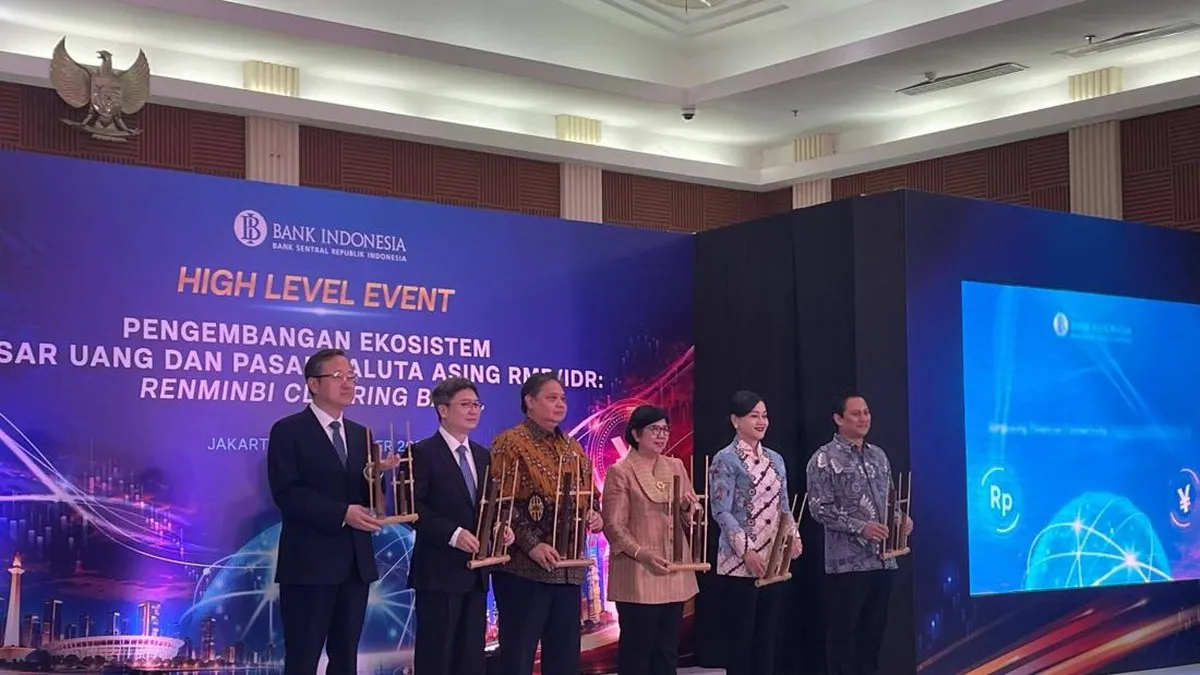
Bank Indonesia launched a renminbi clearing bank in Jakarta on 12 November 2026, aiming to expand domestic access to the Chinese currency and make trade and investment payments between Indonesia and China more efficient.
The People’s Bank of China appointed Bank of China (Hong Kong) Limited Jakarta Branch to perform the role following a memorandum of understanding signed by the two central banks on 11 June 2026. Its functions include providing renminbi liquidity, clearing and settlement services, and instruments for renminbi placement and financing.
At the launch, the Jakarta branch signed a commitment with 12 Appointed Cross Currency Dealer banks to support clearing services and local-currency transactions between the two countries. Bank Indonesia said the initiative forms part of its efforts to develop rupiah-renminbi markets and diversify currencies used for international payments.
Local-currency transactions between Indonesia and China totalled the equivalent of US$43.89 billion in January-September 2026, compared with US$13.19 billion throughout 2025. China accounted for 83.49 per cent of Indonesia’s total local-currency transaction volume, with an average of 5,951 users each month.
Coordinating Minister for Economic Affairs Airlangga Hartarto said China supplied about 45 per cent of Indonesia’s non-oil-and-gas imports. He expressed hope that state companies Pertamina and PLN would use local currencies for oil and gas purchases.
Bank Permata chief economist Josua Pardede cautioned that the facility would not automatically strengthen the rupiah. He said stronger liquidity would require regular, large transactions, more banks actively quoting prices, and balanced renminbi demand and supply. Bank Danamon chief economist Irman Faiz likewise expected any effect on the rupiah to emerge gradually.