Timor-Leste parliament backs 2027 budgets for two deputy prime ministers
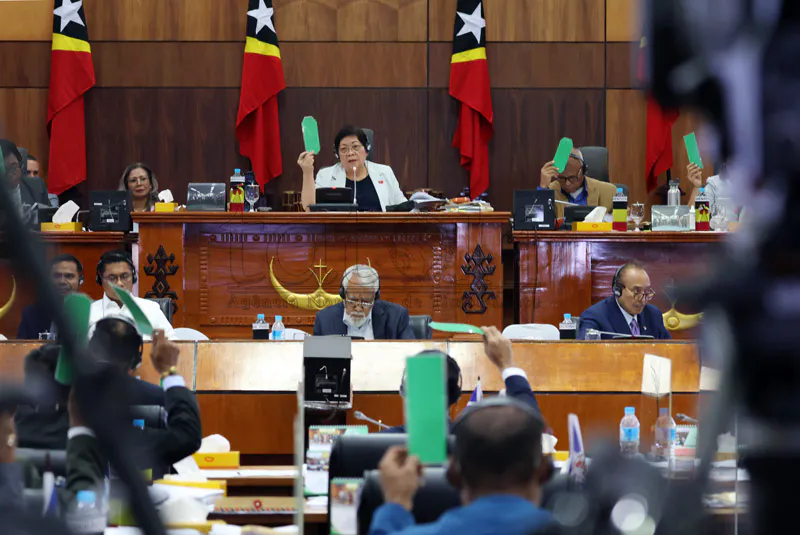
Lawmakers voted 43 in favour, with none opposed and 21 abstaining, after questions about economic development and responsibility for food insecurity programmes.
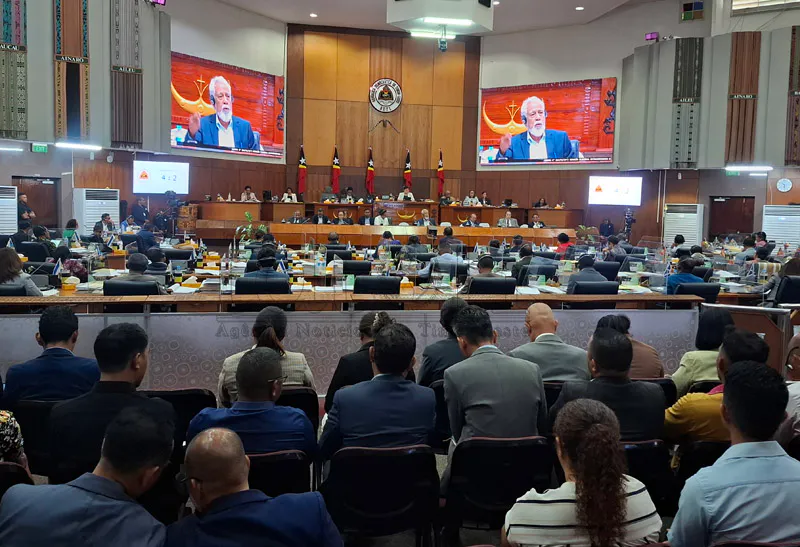
Timor-Leste’s National Parliament on November 25, 2026 approved $506,320 for the deputy prime minister overseeing economic affairs and $784,732 for his social affairs counterpart under the 2027 state budget.
The economic affairs budget assigns $262,231 to salaries and $244,089 to goods and services, supporting institutional operations and development. The social affairs allocation comprises $384,601 for salaries and $400,131 for goods and services. Its programmes also cover institutional operations and development, as well as tackling food insecurity and malnutrition.
Before the vote, FRETILIN opposition MP Antoninho Bianco asked what strategy and research underpinned plans to develop the blue and green economies. He also questioned the placement of food insecurity programmes under social affairs, arguing that they belonged within the productive sector.
Responding, Deputy Prime Minister for Economic Affairs Francisco Kalbuadi Lay described his responsibility as strategic coordination of economic matters. He said economic integration with ASEAN and the WTO presented opportunities, but institutions, companies and workers needed preparation to take advantage of those markets.
Deputy Prime Minister for Social Affairs Mariano Assanami Sabino said the food insecurity programme coordinated ministries’ activities rather than duplicating their work. He explained that food insecurity and malnutrition could be linked to clean-water issues, not only food supplies.
Sabino said the programme formed part of government efforts to address malnutrition in Timor-Leste and reduce reliance on imported food.