Bank Indonesia cites US policy outlook and rupiah pressure for rate rise
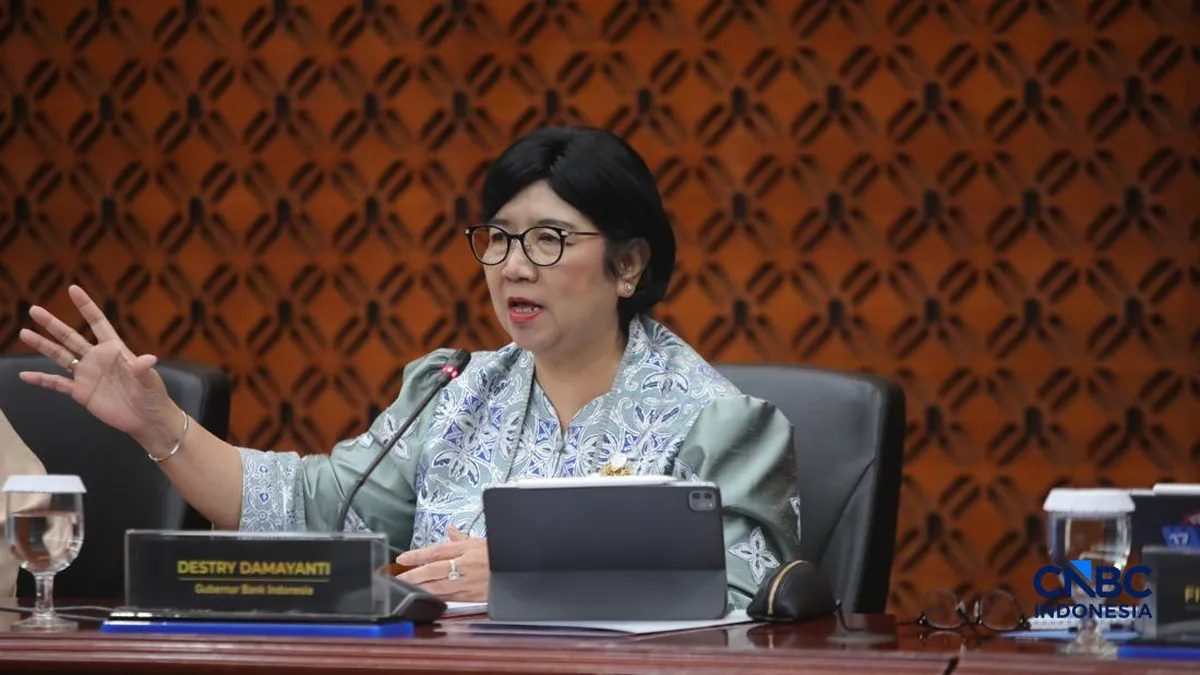
Governor Destry Damayanti said the October increase was accompanied by measures to maintain bank liquidity and support lending.
Bank Indonesia raised its benchmark BI Rate by 25 basis points to 6% in October 2026 to support the rupiah and contain inflation expectations as US monetary policy was expected to become more hawkish, Governor Destry Damayanti said.
Speaking at Financial Forum 2026, Destry said the central bank had sought to avoid an increase and had held rates steady in July, August and September. But global developments prompted a change in October. She cited expectations of a US interest-rate increase in December and Indonesian headline inflation of 3.23%.
Destry said the rate rise came alongside hedging incentives and measures to ease banking liquidity, as BI also sought to support economic growth. Incentives involving swaps and Domestic Non-Deliverable Forward (DNDF) transactions helped attract US$14.1 billion in foreign capital from June to mid-November 2026, she said.
DNDF represented the largest share of those incentives, at 45%. The scheme aims to encourage investors to exchange US dollars for rupiah, increasing domestic foreign-currency supply. BI said financial-market stabilisation also required structural improvements in the balance of payments through exports, imports and foreign direct investment.
BI cut banks' reserve requirement by 1 percentage point in November, adding Rp89.9 trillion in liquidity, Destry said. A further 1 percentage point reduction is planned for December, bringing the requirement from 9% to 7%.
Under its macroprudential liquidity incentive policy, KLM, BI offers incentives of up to 5% to banks lending to strategic priority sectors. By November 2026, liquidity incentives provided to banks totalled Rp466.2 trillion, equivalent to 5.16% of banking third-party funds.
Destry said new lending to agriculture and downstream industries had risen from Rp214 trillion to Rp232 trillion, while housing financing increased from Rp40 trillion to Rp63 trillion. She cited these increases as signs that the incentives were supporting priority-sector financing.